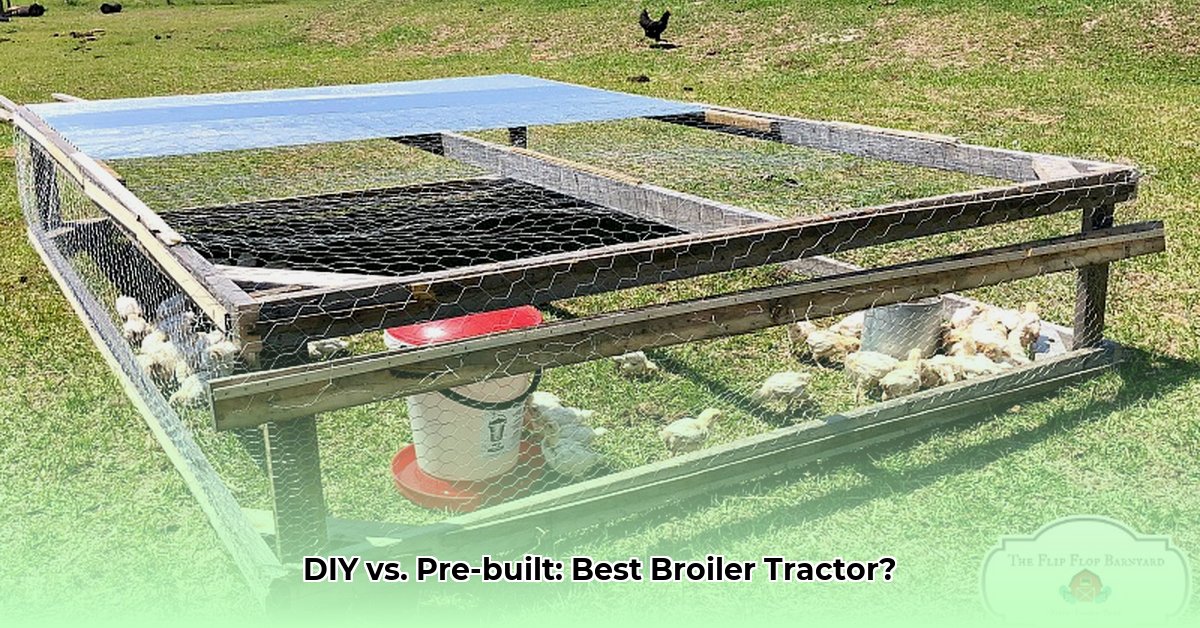
Raising pasture-raised chickens offers numerous benefits, from healthier birds to enriched soil. A mobile chicken coop, or "chicken tractor," is essential for this method, allowing your flock to graze freely. But how do you acquire one? This guide compares building a DIY coop with purchasing a pre-fabricated option like the Chicken Ranger, helping you choose the best approach for your needs and budget. For detailed chicken tractor plans, check out these helpful resources.
DIY Broiler Chicken Tractor Construction: A Hands-On Approach
Building your own chicken tractor is rewarding, offering cost savings and complete customization. However, it requires time, basic carpentry skills, and careful planning. Let's build!
Step-by-Step Guide to Your Custom Chicken Tractor:
1. Design and Planning: Before you start, sketch your coop's design. A good size for a small flock is 4ft x 8ft. Consider the number of chickens, mobility (wheels or runners), and weather protection.
2. Gathering Supplies: You’ll need pressure-treated lumber (for longevity), strong wire mesh (to contain chickens and exclude predators), hinges, wheels or runners, roofing material, and screws or nails. Crucially, don't forget sturdy hardware cloth for the floor, allowing manure to fertilize the ground below.
3. Building the Frame: Construct a sturdy rectangular frame from your lumber. Ensure it's strong enough to withstand the weight of your chickens and potential weather conditions.
4. Chicken Containment: Attach the wire mesh securely, ensuring no gaps exist for escapees or predators. Overlap the mesh for added security.
5. Roofing: Install your chosen roofing material to shield your chickens from the elements. Consider your region's climate.
6. Mobility: Attach the wheels or runners, ensuring even weight distribution for smooth movement.
7. Finishing Touches: Add a ramp or door for access, a secure latch, and ventilation for fresh air. Personalize it!
The Chicken Ranger: A Pre-built Convenience
A pre-built coop, like the Chicken Ranger, offers a quicker solution. Assembly is often fast, and they're typically weather-resistant and durable.
Chicken Ranger: Pros and Cons
Pros: Quick assembly, consistent quality, relatively low maintenance.
Cons: Higher initial cost, limited customization, variable material and wheel quality (check reviews!).
DIY vs. Pre-built: A Comparative Analysis
This table summarizes the key differences between DIY and pre-fabricated options:
| Feature | DIY Broiler Chicken Tractor | Chicken Ranger (Pre-built) |
|---|---|---|
| Upfront Cost | Lower | Higher |
| Construction Time | High | Low |
| Durability | Variable (depends on materials) | Typically High |
| Customization | High | Limited |
| Maintenance | Higher | Lower |
| Scalability | Easy | Moderate |
Choosing the Right Coop: A Decision-Making Framework
Your choice depends on your budget, available time, carpentry skills, and long-term goals. A DIY coop is ideal if you're budget-conscious, enjoy DIY projects, and want customization. However, it requires significant time and effort. A pre-built coop offers convenience but at a higher initial cost and with less customization.
Building a Predator-Proof Mobile Chicken Coop on a Budget
Protecting your flock from predators is critical. A well-designed coop, regardless of whether it's DIY or pre-built, should include several key features.
Key Considerations:
- Hardware Cloth: Use this for the entire coop perimeter, preventing small predators from accessing your chickens.
- Elevated Floor: To deter digging predators.
- Secure Latch: To prevent escapes and unwanted entry.
- No-dig Skirt: Bury hardware cloth around the base to deter digging.
Conclusion
Whether you choose a DIY or pre-fabricated chicken tractor, remember that a well-designed coop is crucial for healthy, happy, and safe chickens. Weigh the pros and cons carefully, consider your resources and skills, and start planning your flock's new, mobile home!